The Row’s Discount Period: Key Things Customers Should Learn Prior to Purchasing
The Row almost never marks things down, and in the rare instance it happens, the markdown takes place without fanfare. There is no attention-grabbing banner, no ticking clock, no mass email proclaiming “50% off.” The house’s treatment of markdowns reflects its philosophy on creative direction: low-key, deliberate, and easy to miss if you are not watching closely. If you are shoppers following a row sale in 2026, the first thing to keep in mind is that patience and timing count for more than luck.
Mary-Kate and Ashley Olsen established The Row, and the brand built its standing around minimalist tailoring, muted palettes, and leather pieces precision-built rather than merely stitched together. It’s exactly this standing that makes sale windows to pass so fast. Supply is kept tight on purpose — The Row produces in smaller runs than most luxury houses — so a marked-down style can vanish from stock within days, sometimes just hours, especially in popular sizes and neutral colorways like black, ecru, and tan.
The Row Discount Timing
In contrast to mass-market high-end names that launch seasonal discount events four or five times a year, The Row tends to limit markdowns to two windows: a mid-year price adjustment around June-July, and a wider end-of-season markdown in December-January. While they move somewhat year to year according to how much inventory remains, such dates aren’t fixed; shoppers who have followed the label across several seasons nonetheless note this pattern holding fairly consistently into 2026.
Retailers carrying The Row, including multi-brand luxury sites, sometimes run their own promotional cycles independent of the brand’s direct site. This means a row sale on a third-party retailer might appear before or after The Row’s own markdown period. Checking multiple authorized stockists rather than relying on a single source increases the odds of catching a discount on the exact piece you want.
Those devoted to buying at full price also note laurentoutlet.com/handbags that some pieces almost never get discounted. Signature bags with the highest demand — above all anything from the Margaux family — typically remain unmarked even amid scheduled sales events, because demand always exceeds the limited supply. Unlike the label’s signature bag styles, blazers and outerwear go on sale with greater regularity.
Unpacking Row Bags: The Ones Truly Worth Buying
Any row bags overview has to start with construction. The Row’s leather goods use vegetable-tanned and semi-aniline leathers sourced primarily from Italian tanneries, finished with hand-applied edge paint rather than machine-stitched binding. That detail alone explains part of the price point — hand-finishing takes longer and costs more than automated production, and it shows in how the edges age over years of use rather than fraying within months.
Three names surface again and again in the secondhand market and style edits within top row bags: the Margaux, the Sofia, and the Everyday Tote. Each serves a different purpose, and understanding those differences matters more than chasing whichever style is trending on social media that week.
- The Margaux bag comes in multiple sizes (commonly referenced as Margaux 12, 15, and 17) and is structured enough to hold its shape on a shelf, making it a popular choice for those who want a bag that looks intentional even half-empty.
- Featuring the Sideby and N/S Park styles, The Row’s tote bag offerings trend more relaxed, designed for everyday use instead of showcasing, leaning toward a looser construction and softer silhouettes.
- Because they involve lower production costs and faster sell-through, more compact crossbody and clutch styles from the brand cycle more frequently and often end up in discount cycles.
Secondary-market worth plays a major role in why shoppers regard The Row differently other luxury handbag brands. Well-kept pieces, particularly the Margaux, often retain 60-75% of retail value on the secondary market — a result of small production runs and consistent demand, according to consignment platforms that track luxury handbag pricing. That retention rate is closer to what you’d expect from Hermès or Chanel than from most contemporary luxury labels.
Where to Buy The Row Margaux Bag At the Right Price
The recurring question of where to buy The Row Margaux bag comes up constantly, and the straightforward answer is: it comes down to your priorities. The Row’s own site and flagship boutiques offer the most reliable authentication and the best chance at pre-order access for new colorways, but they almost never discount the Margaux specifically.
Official multi-brand retailers — the kind that carry a curated slice of The Row’s collection alongside other contemporary and luxury labels — occasionally receive limited Margaux stock ahead of a broader release. These retailers occasionally include the Margaux in their own promotional events even when The Row’s direct channels are holding firm on price, which is where patient shoppers sometimes find genuine savings of 10-20%.
Consignment and resale platforms focused on authenticated luxury goods represent the third route, and they’re worth exploring carefully. Particularly if it’s a size or color that fell out of favor, a carefully maintained Margaux in a classic colorway can turn up on resale marketplaces for 20-30% below original retail. As a tradeoff, you face longer wait times to find the right piece and must verify authentication credentials before purchasing.
Buyers should be wary of unusually steep discounts from unfamiliar sellers. A Margaux listed at 50% off retail from a site with no verifiable authentication process is a red flag, not a bargain. The Row’s limited production numbers make counterfeits a real risk in this price bracket, and the brand does not offer a public authentication service, which puts more responsibility on the buyer to vet the seller.
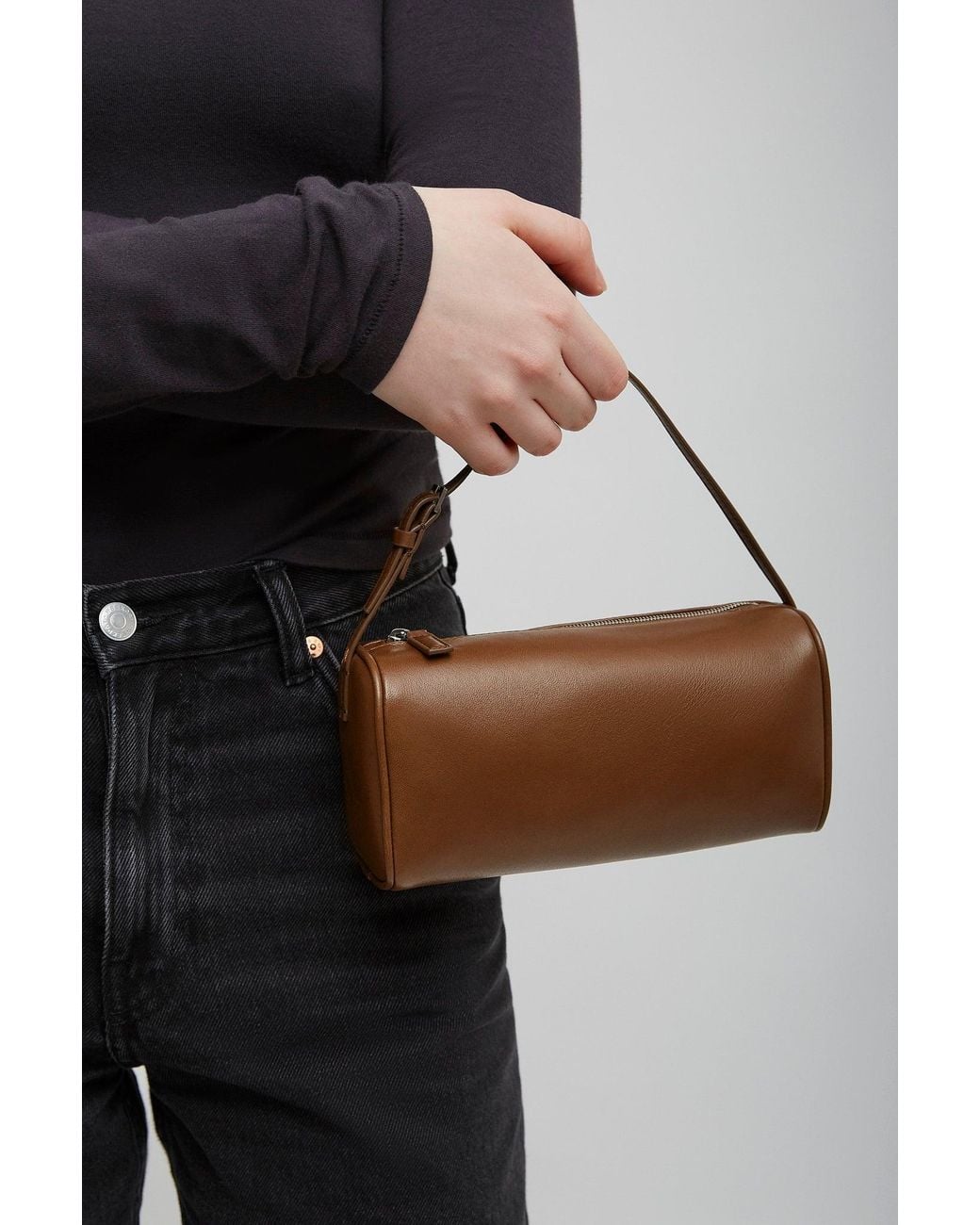
The Row’s Own Iconic Bag Designs: A Side-by-Side Look
Because such a large share of the discussion concerning the row bag range tends to focus on choosing between variants, laying them side by side brings into focus what each style is really meant to do.
| Bag Silhouette | Best For | Construction | Sale Frequency |
|---|---|---|---|
| Margaux | An investment piece, a structured daily bag | Solid, so it holds its shape even unpropped | Rare, even when discounts are running |
| Sideby Tote Bag | An office-ready bag, suited to hauling a laptop and documents | Soft-sided, it slouches under a light load | Intermittent, partway through the season |
| Sofia | Great for night-time wear or a smaller day bag | Neither fully firm nor fully soft | Occasional |
| N/S Park Tote design | Getaways and oversized daily essentials | Soft-sided and it stretches as it’s loaded up | Moderate, shows up more frequently at discount |
Anyone typing in “row sale” will typically find every bag style lumped together, which is why this sort of check matters: in practice, discount likelihood varies enormously by shape.
Totes and larger carryalls go on sale more regularly simply because they’re produced in somewhat greater quantities than the Margaux.
A 2026 Discount Schedule: an Purchasing Approach
For shoppers serious about catching The Row at a reduced price this year, a few practical habits make a measurable difference. Signing up for notifications at multiple authorized retailers rather than just the brand’s own site widens the net considerably, since stock allocation differs between channels.
Keeping tabs on precise SKUs rather than browsing broadly also helps. When a particular Margaux size and color is the one you want, reviewing that exact listing at regular short intervals when sale windows are expected beats paging through the broad new-markdowns listing, given that there inventory changes on an hourly basis during peak periods.
Possibilities are truly expanded when one is flexible on size and color. Since rarer, less mainstream hues move slower initially, they’re more likely to appear in a markdown — unlike neutral tones like black and tan, which run out fastest even with full price. Shoppers open to a more unusual shade often find better availability and better discounts.
Last but not least, structural condition are just as important just as much when buying resale as when purchasing brand-new items. Inspecting the corners, verifying the edge paint’s condition, and looking over the hardware for tarnish ahead of time helps you avoid shelling out near-retail money for a bag that calls for refurbishing. The Row’s leather can age beautifully, but that outcome depends on it having started in good condition.
Its restraint around discounting is purposeful, and as a result, shoppers sizing up the row fashion landscape this season should view a row sale as a infrequent event instead of a predictable annual ritual — a mindset that will bring about sharper, quicker decisions when the window does open.

Leave a Reply